



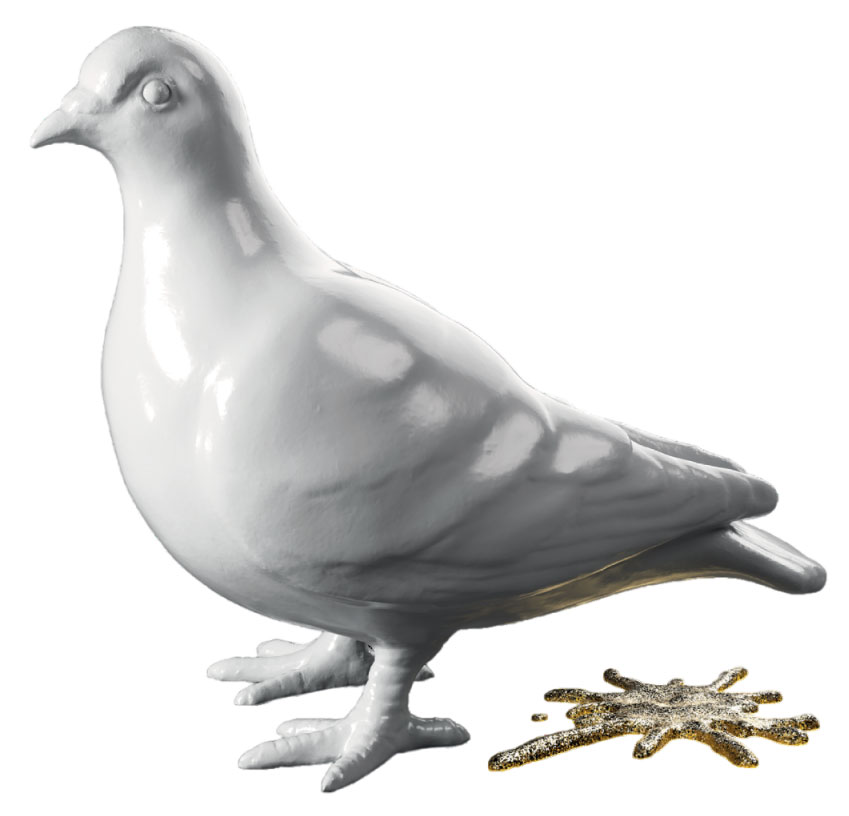
London Museum's New Logo: A Pigeon Pooping?
The London Museum recently unveiled a new logo that has left Londoners and the internet buzzing. The logo features a gleaming white porcelain pigeon, accompanied by a glittering gold splatter—a visual representation of bird droppings. This unexpected design has sparked a mix of reactions, from amusement to bewilderment, as it attempts to capture the essence of the sprawling and historic city of London.
A Symbol of London's Urban Life
According to a blog post from the London Museum, formerly known as the Museum of London, the pigeon was chosen as a symbol of the city because it has been "an impartial and humble observer of London life" for nearly 1,000 years. The pigeon, a quintessential urban bird, has been a fixture in London’s landscape since the time of the Norman Conquest in 1066.
The new logo was designed by Uncommon Creative Studio, which collaborated with 33 Londoners from various boroughs, including a chef, a DJ, a children's TV producer, a boxer, and a tattoo artist. Workshops and focus groups were conducted to gather insights, and hundreds of Londoners provided their input through surveys.
A Logo That Gets People Talking
The museum’s director, Sharon Ament, believes the logo succeeds in its primary goal: sparking conversation. "A good logo gets people talking," she stated. "The pigeon and splat speak to a historic place full of dualities, where grit and glamour have coexisted for centuries."
However, not everyone is convinced. Critics like Maxwell Blowfield, author of the popular "Maxwell Museums" newsletter, have expressed their confusion. Blowfield described the logo as "baffling," questioning why the museum would choose a pigeon—a bird he believes few people think about—as the symbol for such a remarkable city.
The History of Pigeons in London
Pigeons, descendants of rock doves, were domesticated in the U.K. around the time of the Norman Conquest. Originally used as a food source and for long-distance communication, some pigeons escaped and became the feral birds seen throughout London today.
The London Museum's collection includes a white clay Roman figurine of a pigeon from the 1st century C.E., linking the bird to its historical roots in the city.
Pigeons in Popular Culture
Pigeons have played a notable role in London's cultural history. In the Victorian era, it was common to see people selling bird seed in Trafalgar Square for visitors to feed the pigeons. This practice was immortalized in scenes like those painted by Harold Dearden in the 1950s.
The iconic song "Feed the Birds" from Disney's Mary Poppins (1964) also depicts a "little old bird woman" feeding pigeons on the steps of St. Paul’s Cathedral. However, this tradition was curtailed in 2000 when the Greater London Authority banned the feeding of pigeons in Trafalgar Square, aiming to reduce the presence of the birds, which are often seen as pests.
A Memorable Mascot or Just for the Birds?
As the London Museum embraces its new logo, the question remains: will this quirky design resonate with museum-goers, or will it be dismissed as too offbeat? Only time will tell if this pigeon—and its glittering splat—will leave a lasting impression on the city it aims to represent.