



A Tiny Foot, A Monumental Moment: Michelangelo Breaks Records at Auction
Sometimes the most powerful works of art aren’t monumental frescoes or towering sculptures. Sometimes, they fit in the palm of your hand.
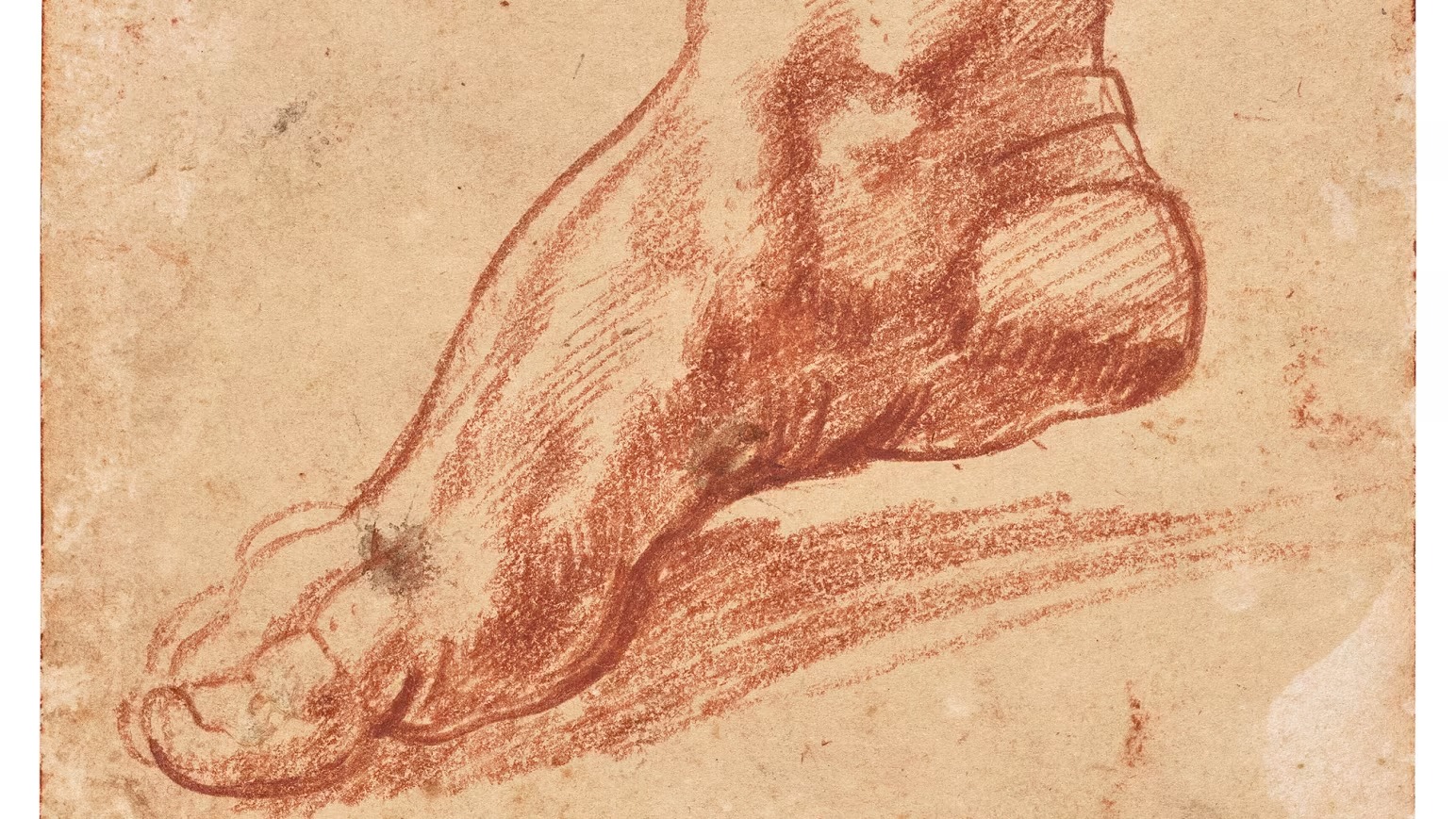
Last week in New York, a small red-chalk drawing, barely larger than a hand, sold at Christie’s for an astonishing $27.2 million. The artist? None other than Michelangelo.
At first glance, the sketch is simple. It depicts a single foot: heel lifted, toes slightly curled, the faint suggestion of shadow grounding it. Modest. Intimate. Almost quiet.
And yet, that quiet study is directly connected to one of the most iconic ceilings in the world.
From Portal Upload to Renaissance Treasure
The drawing surfaced in an almost cinematic way. Its owner uploaded a photograph to an auction house’s online valuation portal, unaware of its significance. What followed was months of careful study and scholarly debate.
Specialists ultimately determined the sketch was a preparatory study for the Libyan Sibyl on the Sistine Chapel ceiling, painted by Michelangelo between 1508 and 1512.
If you look closely at the Libyan Sibyl—her body twisting as she places a book behind her, you’ll see that same lifted heel, that same tension in the toes. What appears effortless on the chapel ceiling was first wrestled into existence through chalk on paper.
That small drawing captures the physical intensity of Michelangelo’s process. You can almost feel the pressure of the red chalk as it digs into the paper.
Why This Sale Matters
Michelangelo destroyed many of his preparatory drawings. Others were lost, damaged, or dispersed over centuries. Only around 50 Sistine-related sketches are known to survive, and none from this series had ever appeared at auction before.
That rarity ignited fierce competition. The drawing ultimately sold for nearly 20 times its estimate, setting a new auction record for a work by Michelangelo.
But beyond the headline number, the sale speaks to something deeper: the enduring power of masterful draftsmanship.
In a market often driven by spectacle and scale, this was a reminder that greatness can reside in the smallest gesture.
Provenance and Patience
The drawing had been in the same family for more than 200 years. It was originally acquired in the 18th century by a Swiss diplomat traveling across Europe. Passed down through generations, it remained largely unknown to the wider art world until now.
That kind of provenance adds gravity, not just in monetary terms, but in narrative.
This wasn’t a rediscovered painting in a museum vault. It was a quiet heirloom that turned out to be a fragment of Renaissance genius.
Small Scale, Monumental Impact
There’s something poetic about a tiny study commanding such a monumental price. It reinforces a truth we see repeatedly in the art world:
Scale does not determine significance.
A single foot, sketched in preparation for one of the greatest artistic achievements in human history—can carry the weight of centuries.
At ArtLoop, stories like this remind us why we look closely. Why we slow down. Why we value process as much as product.
Because sometimes, the smallest details hold the biggest revelations.